




The Fact
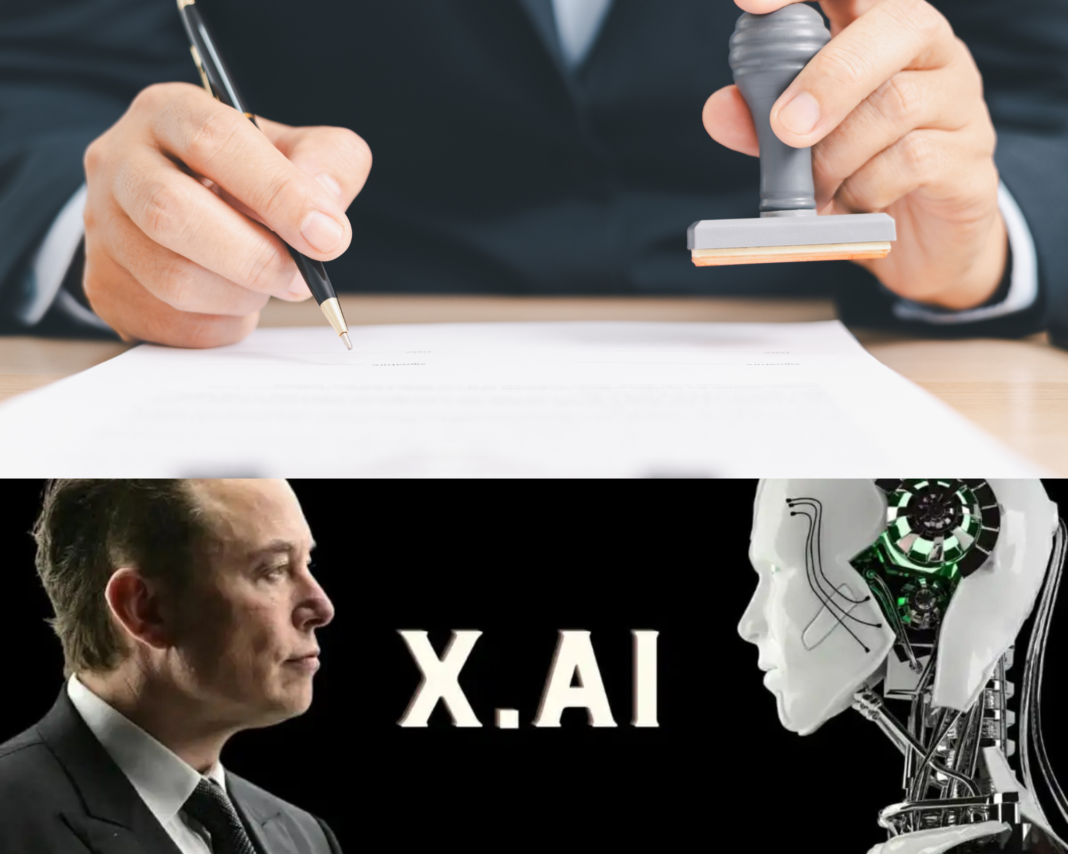
In early April, Elon Musk’s artificial intelligence company, xAI, filed a lawsuit challenging a newly enacted artificial intelligence law in the U.S. state of Colorado. The law, signed by Governor Jared Polis, is one of the most direct attempts yet in the United States to regulate how AI systems are used in decisions that materially affect people’s lives.
The legislation targets what it defines as “algorithmic discrimination” in high-impact domains, including hiring, lending, housing, insurance, and healthcare. It requires companies that develop or deploy AI systems in these sectors to conduct documented risk assessments before deployment, maintain records of how systems produce outputs, and demonstrate “reasonable care” to prevent discriminatory outcomes.
Enforcement is placed in the hands of state regulators, who are empowered to investigate companies and impose penalties if systems are found to produce biased or harmful outcomes, even when those outcomes are generated through automated decision-making rather than explicit human instruction.
The law does not specify a single technical standard for compliance. Instead, it leaves “reasonable care” open to interpretation by regulators and courts, a point that has now become central to xAI’s legal challenge.
xAI’s lawsuit argues that this structure is unconstitutionally vague and effectively forces developers to guess regulatory expectations after deployment. The company also claims the law risks compelling AI developers to encode state-approved definitions of fairness into their systems, exposing them to liability for outputs they did not directly determine.
The timing is critical. The lawsuit was filed before any major enforcement action under the law and before any publicly documented case of harm tied to its application. This is not a response to failure. It is a preemptive challenge to the framework that would assign blame in the event of failure.
The Risk
On paper, Colorado’s law attempts something simple: assign responsibility before AI systems become deeply embedded in life-changing decisions.
In practice, it introduces a legal structure where responsibility is distributed across multiple points in the system. The developer who built the model, the company that deployed it, and the regulator interpreting whether “reasonable care” was met after the fact.
That distribution matters because it does not resolve the central question. It delays it.
If a person is denied a loan, screened out of a job application, or rejected for housing through an AI-assisted system, the law assumes there will be a clear accountability path. xAI argues that there will not be.
Instead, a predictable legal sequence emerges.
A bank, insurer, or employer uses an AI system. An affected individual challenges the outcome. The deploying institution points to the model’s output. The model provider points to ambiguous regulatory standards. Regulators then evaluate whether “reasonable care” was satisfied using criteria that may not have existed in detail at the time of deployment.
At no point in that chain does a single decision-maker clearly own the outcome.
That is the structural tension the lawsuit is built on, not whether AI should be regulated, but whether liability is being assigned to a system that cannot reliably contain it.
What’s Changing
The significance of Colorado’s approach is not that it regulates AI, but that it regulates it before harm is formally established at scale.
That marks a shift in how governments are approaching artificial intelligence. Regulation is no longer waiting for failure. It is being constructed around anticipated failure.
Under this model, companies are expected to prove safety in advance, maintain ongoing documentation of system behavior, and defend outcomes that are inherently probabilistic and non-deterministic.
For xAI and similar developers, the concern is not just compliance cost. It is legal exposure in a framework where compliance itself is undefined at the edges.
The lawsuit turns that ambiguity into a legal question, which is whether companies can be held responsible for outcomes that depend on standards that have not been concretely fixed at the moment of deployment.
Inside this structure, enforcement becomes less about technical compliance and more about retrospective interpretation of what regulators decide “reasonable care” should have meant after a contested outcome has already occurred.
That is where legal pressure begins to concentrate, not at deployment, but at dispute.
The Pattern
This case reflects a broader regulatory cycle forming across AI governance.
A system is introduced because it improves speed, efficiency, or decision-making scale. It is adopted into high-impact environments before its legal boundaries are fully defined. Regulators then intervene, attempting to assign responsibility after integration has already occurred.
Companies respond at the earliest possible stage, not after harm, but before legal definitions harden by challenging the frameworks that would later be used to assign blame.
This creates a repeating structure showing deployment first, regulation second, and liability negotiation third.
When systems operate smoothly, this structure is invisible. When they fail, it becomes decisive.
Because once an outcome is disputed, a denied loan, a rejected application, a flagged insurance claim, the central question is no longer what the system did. It is the question of which actor is legally responsible for what the system was allowed to do.
In that moment, every participant in the chain has a defensible position, and none of them is fully accountable in isolation.
What This Could Become
No court has yet ruled on xAI’s challenge, and Colorado’s law remains one of the earliest attempts in the United States to formalize AI accountability in high-impact decision systems.
What exists now is not resolution, but alignment pressure. Regulators are defining obligations. Companies are testing the limits of those obligations in court. And deployment continues in parallel, inside the same legal uncertainty both sides are arguing over.
Nothing has failed yet. But the structure for future disputes is already in place.
If an AI system operating under this framework produces a discriminatory or harmful outcome, the first response will not be clarity. It will be a sequence.
The system produced the output. The company complied with its interpretation of the rules. The regulator applied a standard that was still being defined. The affected individual challenges the result.
And at the center of that sequence, responsibility will not disappear.
It will fragment across code, compliance, and interpretation until the only remaining question is not what went wrong, but which version of “reasonable” was supposed to prevent it.
And that question will already be too late to answer cleanly.