




The Facts
Brian Armstrong confirmed that Coinbase had reduced its workforce by roughly 14%, linking the cuts to gains in productivity from artificial intelligence tools.
In a public statement and internal memo later circulated online, Armstrong said AI systems were allowing engineers to complete work in days that previously took weeks. According to him, the company needed to restructure around that new level of efficiency.
Coinbase is not alone. Other firms, including Crypto.com and companies across the tech sector, have increasingly pointed to AI adoption while announcing layoffs and restructuring measures.
The message is becoming familiar. Fewer people are needed because the tools are getting better.
The Blame
In stories like this, AI becomes the explanation before it becomes the evidence.
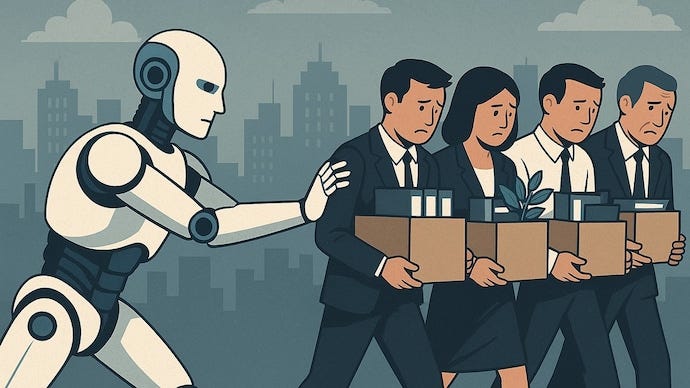
The layoffs are framed as a response to technological change, as though the decision emerged naturally from the software itself. Productivity increases are presented as inevitable forces that companies simply adapt to. But companies do not cut jobs because AI exists.
They cut jobs because executives decide the savings, restructuring, or investor confidence gained from layoffs outweigh the cost of keeping those workers employed. That distinction matters.
The Real Story
AI did not wake up and decide Coinbase needed fewer employees.
Human executives looked at new tools, calculated the financial and operational advantages those tools could create, and made a management decision about staffing. The technology may have influenced the decision. It did not make it.
That framing changes how responsibility is understood. When layoffs are described as “because of AI,” accountability begins to drift away from leadership and toward the idea of automation itself. The machine becomes the story. The strategic choices behind the machine become background noise. And there is a reason companies like this frame.
“AI-driven restructuring” sounds objective, modern, even unavoidable. It creates distance between executives and the social consequences of cutting jobs. The decision starts to feel less like a corporate choice and more like an economic law nobody controls. But these are still human decisions about labor, cost, growth, and priorities.
The software may improve productivity. The company still chooses what to do with that improvement.
The Aftermath
Armstrong’s comments quickly spread across X, LinkedIn, and tech media, where reactions split between optimism about AI productivity and concern over the growing use of automation narratives in workforce reductions.
The discussion also reflects a broader pattern across the industry. Companies are increasingly presenting AI not just as a tool, but as a justification, a way to explain restructuring decisions that would otherwise face heavier scrutiny.
As more firms adopt this language, the line between technological necessity and executive choice may become harder to separate.
The Verdict
WHO’S BLAMING AI
Coinbase leadership linked layoffs to AI-driven productivity gains.
WHAT ACTUALLY HAPPENED
Executives made staffing cuts after deciding automation created a more profitable operating structure.
WHO GOT AWAY WITH IT
Corporate leadership frames management decisions as technological inevitability.
BLAME RATING
🤖🤖🤖🤖🤖 (5/5)