

The Facts
South Africa’s government withdrew a draft national artificial intelligence policy after it was discovered that the document contained non-existent academic references.
The draft policy, linked to the Department of Communications and Digital Technologies, was meant to guide the country’s approach to AI regulation. However, reviewers found that several cited sources could not be verified and appeared to be fabricated or AI-generated.
Communications Minister Solly Malatsi confirmed the withdrawal and said the matter raised serious concerns about how the document was compiled. He noted that the references were included without proper verification.
Following the discovery, reports from local media indicated that officials involved in the drafting process were suspended while an internal review was launched.
The Blame
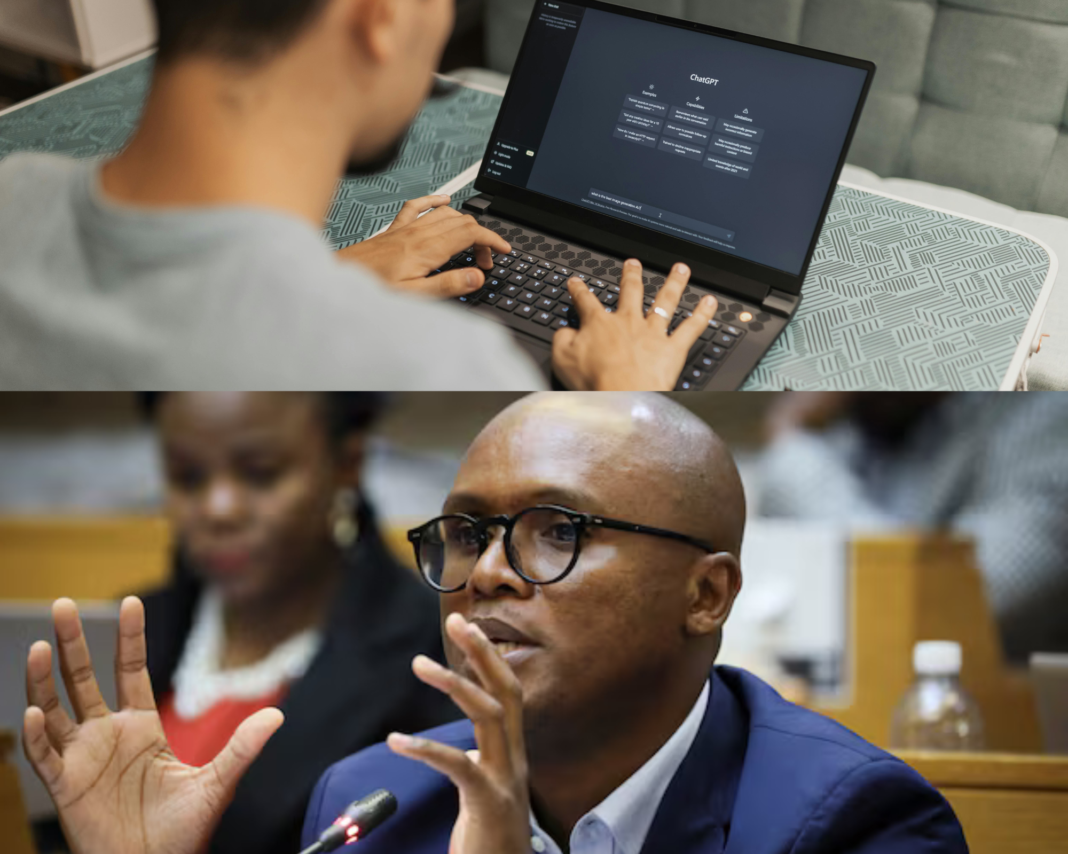
Early explanations from within the drafting process suggested that AI tools may have been used to assist with research and document preparation.
The core issue raised was not just the presence of errors, but the possibility that AI-generated content was accepted into a government policy draft without verification.
While no official has publicly stated “AI caused this,” the framing of the incident has repeatedly pointed toward AI-assisted drafting as the source of the faulty citations.
The Real Story
The document did not approve itself. What looks like an “AI error” is actually a chain of human decisions that went unchallenged across multiple stages of review.
The policy draft passed through officials responsible for research, verification, and approval. At each stage, there was an expectation that the references listed in the document would be checked for accuracy and legitimacy before the policy moved forward. That did not happen.
Instead, fabricated citations made it into a national-level draft, meaning no one in the process took the basic step of confirming whether the sources actually existed. Whether AI tools were used for drafting or research, they were only one part of the workflow. The failure came when humans treated the output as reliable without proper verification.
By the time the issue was discovered, the document had already progressed far enough to require formal withdrawal. The problem was not just that AI-generated content appeared in the draft, but that the safeguards meant to catch exactly this kind of error were not enforced.
The Aftermath
The policy was formally withdrawn, and an internal investigation was launched into how the references were introduced and approved.
The incident triggered wider scrutiny of how AI tools are being used in government drafting processes across Africa, especially in policy and regulatory documents.
Officials involved faced suspension pending review, and the department is expected to revise its internal verification standards before reintroducing any AI-related policy frameworks.
The Verdict
WHO’S BLAMING AI
Drafting teams implied that AI-assisted tools contributed to the fake citations
WHAT ACTUALLY HAPPENED
A government policy draft included unverified and non-existent references
WHO GOT AWAY WITH IT
Multiple layers of human review failed to catch the errors before publication
BLAME RATING
4/5